Understanding First Date Anxiety
What Causes Nervousness Before a First Date?
Feeling nervous before a first date is completely normal. It often stems from the uncertainty of the unknown—wondering how you’ll connect, whether you’ll make a good impression, or if the other person will like you. Sometimes, past dating experiences or personal insecurities can amplify this anxiety, making your mind race with “what if” scenarios. This nervousness is essentially your body preparing for a situation that feels important and unpredictable.
Common Physical and Emotional Symptoms
Anxiety can show itself in many ways. Physically, you might notice a racing heart, sweaty palms, or butterflies in your stomach. Emotionally, feelings might include self-doubt, overthinking, or even moments of dread. These sensations can be overwhelming and make it difficult to focus on the present moment, which is key for a successful date.
Impact of Anxiety on First Date Experiences
When anxiety takes over, it can cloud your ability to connect authentically. You might find yourself stumbling over words, avoiding eye contact, or getting stuck in your head. This can create a cycle where anxiety feeds itself, making the date feel more stressful than enjoyable. Recognizing this impact is the first step toward managing it effectively.
Preparation Techniques to Reduce Anxiety
Practical Tips for Pre-Date Planning
Preparation is a powerful tool to help ease first date anxiety. Planning your route, choosing a familiar location, or having a backup plan can all help you feel more in control. It’s also helpful to plan conversational topics in advance, focusing on light and open-ended questions that encourage natural dialogue without pressure.
The Role of Positive Visualization
Visualization is more than just wishful thinking—it’s a mental rehearsal that calms your nerves. Spend a few minutes imagining the date going smoothly: you’re relaxed, having fun, and enjoying good conversation. This mental exercise can reframe your mindset from worry to anticipation, helping you approach the date with a positive attitude.
How to Choose the Right Outfit and Setting
Your outfit and the setting can greatly influence your confidence. Wearing something that makes you feel comfortable and true to yourself will boost your self-esteem. Similarly, picking a location that feels safe and casual—like a quiet café or a park—can put you at ease. Avoid overly formal or unfamiliar places that might raise your stress levels.
Step-by-Step Confidence Building Exercises
Daily Affirmations and Self-Talk Strategies
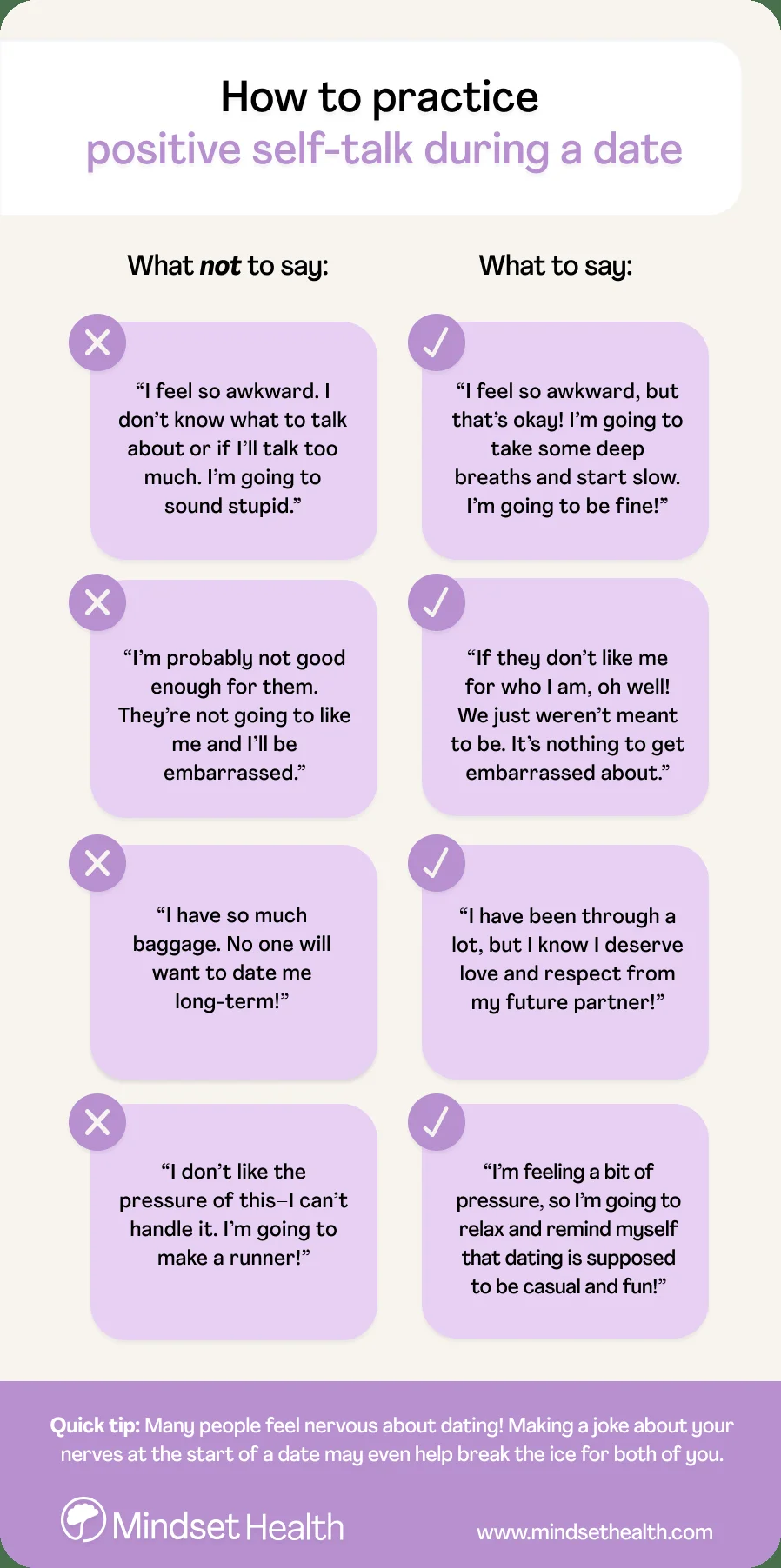
What you say to yourself matters more than you might realize. Try starting each day with positive affirmations such as, “I am worthy of love,” or “I bring value to any interaction.” Repeating these can shift your inner dialogue from critical to supportive, building a foundation of confidence before you even meet your date.
Breathing and Mindfulness Practices to Stay Calm
Simple breathing exercises can be lifesavers when anxiety spikes. Techniques like deep belly breathing or the 4-7-8 method help slow your heart rate and clear your mind. Mindfulness practices encourage you to stay present, observing your surroundings and sensations without judgment. This focus can reduce the overwhelm and keep anxiety in check.
Role-Playing Conversations to Boost Social Skills
Practicing conversations with a trusted friend or in front of a mirror can ease the pressure of thinking on your feet. Try rehearsing common questions or opening lines until they feel natural. This exercise builds confidence by familiarizing you with social interactions, so you’re less likely to freeze or overthink during the real date.
During the Date: Managing Anxiety in Real-Time
Recognizing and Calming Anxiety Signs on the Spot
It’s important to recognize when anxiety begins to rise during the date. If you notice your breathing quickening or your thoughts spiraling, pause and take a slow, deep breath. Ground yourself by focusing on the present—feel your feet on the floor or notice details in your environment. These small actions help interrupt the anxiety cycle immediately.
Strategies for Maintaining Authenticity and Presence
Being authentic means allowing yourself to be imperfect and genuine. Instead of trying to impress, focus on being curious about your date and sharing who you really are. Maintaining eye contact and actively listening not only shows respect but helps you stay engaged, reducing anxious thinking about how you’re being perceived.
How to Handle Awkward Moments Gracefully
Awkward moments happen and they’re nothing to fear. Laughing them off or sharing a lighthearted comment can ease tension and make both of you feel more comfortable. Remember, no date is perfect, and these moments often create memorable connections rather than failings.
Post-Date Reflection and Continual Growth
Analyzing What Went Well and Areas for Improvement
After your date, take some time to reflect honestly on the experience. Celebrate what went well, whether it was a great conversation or simply feeling more relaxed. Identify areas you’d like to improve, such as managing nerves or asking more questions, but approach this reflection with kindness rather than harsh self-criticism.
Using Feedback to Build Future Confidence
Sometimes, friends or even your date can offer constructive feedback that helps you grow. Be open to this input without taking it personally. Each date, successful or not, is a learning opportunity that brings you closer to feeling confident in your dating abilities.
Setting Realistic Expectations for Subsequent Dates
It’s easy to put too much pressure on one date, but dating is a process, not a single event. Try to view each meeting as a chance to connect and learn, rather than as a make-or-break moment. Setting realistic expectations keeps anxiety at bay and allows your confidence to build naturally over time.