Understanding Emotional Eating: The First Step to Overcoming It
Defining Emotional Eating and Its Triggers
Emotional eating often creeps into our lives unnoticed until it starts affecting our weight and well-being. It’s the act of consuming food in response to feelings rather than hunger. Imagine Sarah, who after a stressful day at work reaches for a tub of ice cream, not because she’s hungry, but to soothe frustration. This behavior stems from emotional triggers such as stress, boredom, loneliness, or even happiness.
Recognizing these triggers is crucial since they differ from physical hunger. Emotional eating is usually impulsive and often leads to overeating unhealthy foods, which can derail your weight goals.
How Emotional Eating Impacts Weight Management
Emotional eating can turn into a vicious cycle, where food is used as a coping mechanism, often resulting in guilt and further emotional distress. John experienced this firsthand; after repeated emotional binges, he noticed not just weight gain but also a decline in his energy levels and self-esteem. This pattern can stall weight loss efforts or even cause weight gain, making it harder to maintain a balanced lifestyle.
Understanding the consequences of emotional eating highlights why it’s important to develop strategies that address both the emotional and physical aspects of eating.
Identifying Personal Emotional Eating Patterns
Keeping a Food and Mood Journal
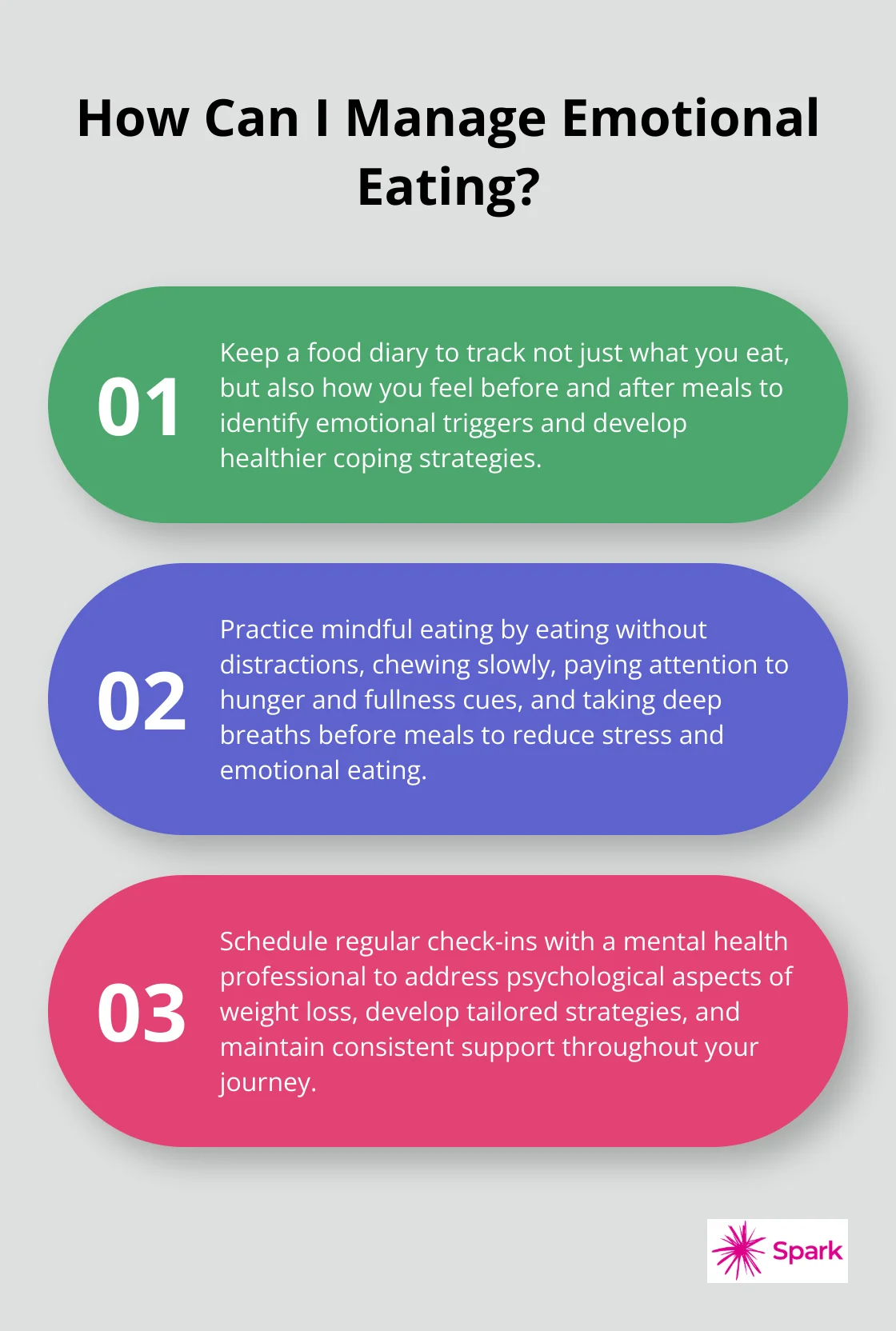
A practical way to pinpoint emotional eating is by maintaining a food and mood journal. Jessica started jotting down what she ate alongside her feelings throughout the day. This habit revealed that she often turned to snacks when feeling anxious or lonely, helping her become more aware of these moments. The journal doesn’t have to be complicated—just simple notes about what, when, and why you ate can shed light on patterns.
Recognizing Common Emotional Triggers
Emotional triggers vary for everyone, but many share common experiences. Stress from work deadlines, relationship conflicts, or even celebratory occasions can prompt emotional eating. Take the example of Mike, who noticed that weekends without plans often led to overeating out of boredom. Recognizing these triggers allows you to prepare and respond differently when they arise, reducing the likelihood of indulging in unhealthy eating.
Effective Techniques to Manage Emotional Eating
Mindfulness and Meditation Practices
Mindfulness offers a powerful tool to break free from automatic eating behaviors. When Emma began practicing meditation daily, she became more attuned to her body’s true signals versus emotional impulses. Mindfulness helps in pausing before reaching for food and questioning whether it’s hunger or emotion driving the desire to eat.
Simple breathing exercises or brief moments of reflection before meals can create emotional space, fostering healthier decisions around food.
Healthy Alternatives to Stress Eating
Finding constructive outlets for emotions is key. Instead of turning to comfort foods, consider activities like walking, journaling, or calling a friend. Tom replaced his evening snacking habit with gentle yoga stretches, which not only distracted him but also eased his stress. These alternatives fulfill the emotional need without compromising weight goals.
Building a Support System for Accountability

Having someone to share your journey with can drastically improve success. Whether it’s a friend, family member, or support group, accountability keeps you grounded. Maria credits her weight loss success to weekly check-ins with a buddy who helped her stay mindful of emotional triggers and celebrate small victories.
Integrating Nutrition and Exercise to Support Weight Goals
Balanced Meal Planning for Emotional Stability
Nutrition plays a supportive role in managing emotional eating by stabilizing blood sugar and mood. Balanced meals rich in protein, fiber, and healthy fats can reduce cravings and mood swings. Consider how Alex found that consistent meal timing and nutrient-dense foods helped curb his tendency to binge later in the day.
Planning meals ahead also removes the guesswork during emotional moments, making healthy choices easier.
Using Physical Activity as an Emotional Outlet
Exercise doesn’t just burn calories; it serves as a natural stress reliever. When Lisa felt overwhelmed, she took up running and noticed it channeled her negative feelings into productive energy. Regular physical activity increases endorphin levels, lifting mood and reducing the need to seek comfort through eating.
Integrating enjoyable activities, whether it’s dancing, swimming, or a brisk walk, makes this strategy sustainable and effective.
Long-term Strategies for Staying on Track
Setting Realistic Weight Goals
Setting achievable targets keeps motivation alive without setting you up for disappointment. Instead of an unrealistic goal of losing 30 pounds in a month, breaking it down to 1-2 pounds per week, as Sarah did, made the journey manageable. Realistic goals accommodate life’s ups and downs, including occasional emotional eating episodes, without losing sight of progress.
Developing Sustainable Lifestyle Habits
When Jason switched from a fad diet to incorporating gradual changes like meal prepping and daily walks, he created habits that lasted. Sustainability means focusing on behaviors that fit seamlessly into daily life rather than drastic measures. Over time, these habits become second nature, reducing reliance on willpower alone.
Recognizing and Managing Relapses
Relapses are a natural part of change. When Nina found herself emotionally eating during a tough life event, she didn’t view it as failure but a cue to refine her strategies. Acknowledging setbacks without harsh judgment allows you to learn, adjust, and move forward.
Keeping your support network informed during such times can provide encouragement and reminders of your goals.