Understanding Oily Skin and Its Specific Needs
What Makes Skin Oily?
Oily skin results from an overproduction of sebum, the natural oil secreted by sebaceous glands. This excess oil can leave the face looking shiny and feeling greasy throughout the day. Factors such as genetics, hormones, and environmental conditions often influence how much oil the skin produces.
How Oily Skin Reacts to Different Products
Oily skin tends to react differently to skincare products compared to dry or combination skin. Heavy or occlusive products may clog pores, leading to breakouts or irritation. Conversely, overly drying products can trigger the skin to produce more oil, worsening the problem. Thus, understanding how oily skin responds helps in selecting the right skincare routine.
Common Mistakes When Layering Skincare
Applying Too Many Products at Once
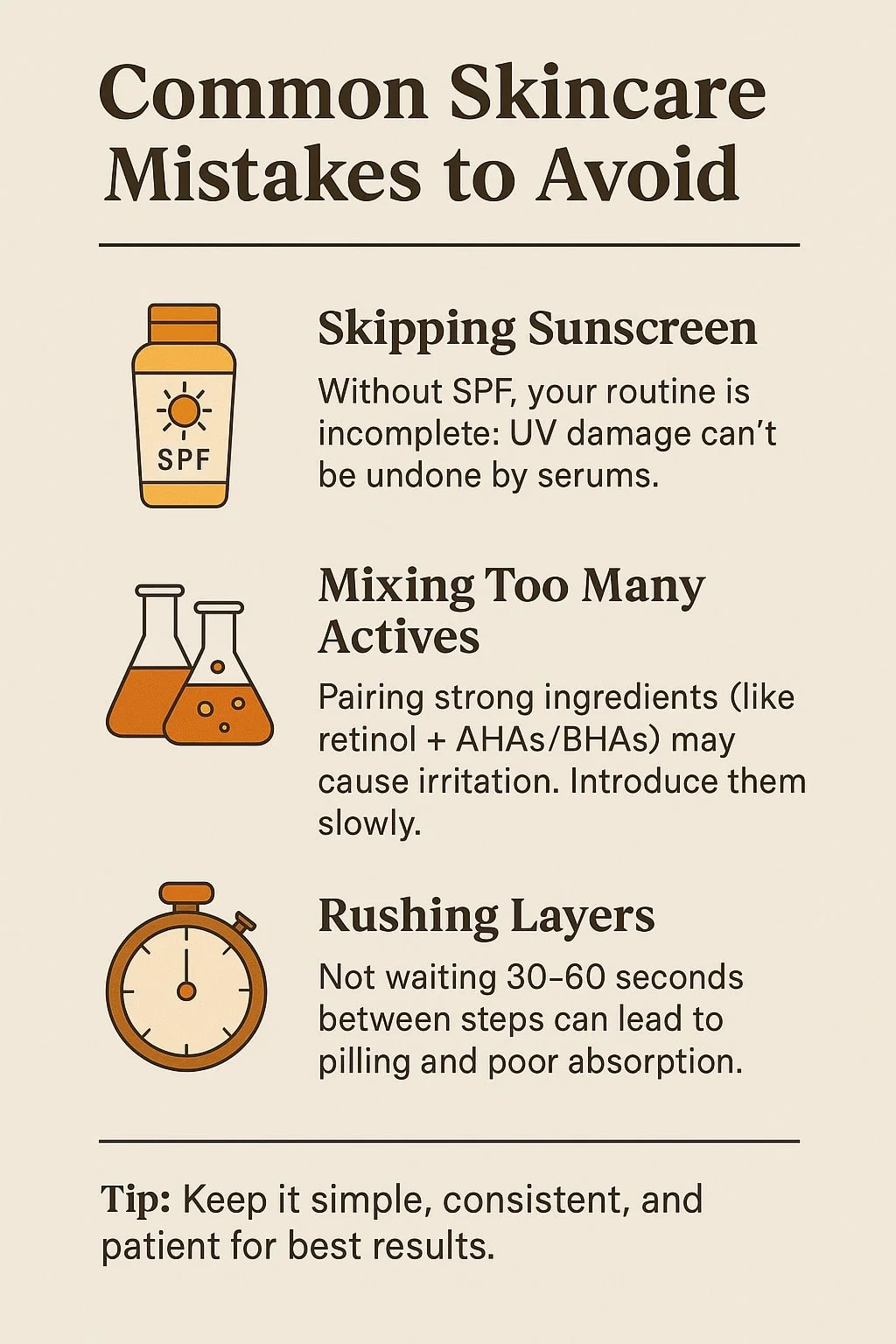
One frequent error is layering several products in a single routine. While it may seem effective to use all available treatments, overloading the skin can overwhelm it. Too many layers can create a barrier that traps oil and dirt, leading to clogged pores or irritation. It’s best to keep the routine simple and targeted.
Ignoring Product Texture and Consistency
Texture matters when layering skincare for oily skin. Using thick creams followed by heavy serums tends to feel greasy and may not absorb well. Lightweight, gel-based, or water-based formulas are typically better suited for oily skin. Failing to consider these factors can reduce product effectiveness.
Using Incompatible Ingredients Together
Some ingredients don’t pair well, particularly in oily skin care. Combining potent actives like retinol with strong exfoliants without proper spacing can cause irritation or dryness. It’s important to understand which ingredients enhance each other and which should be used separately.
The Right Order to Layer Products for Oily Skin
Cleansers and Toners: Prepping the Skin
Start with a gentle cleanser designed for oily skin to remove excess oil without stripping natural moisture. Follow with a toner that balances pH and controls oil production. Toners with ingredients like witch hazel or salicylic acid can help keep pores clean and reduce shine.
Serums: What to Choose for Oil Control
Next, apply serums that target oiliness and acne-prone skin. Niacinamide and hyaluronic acid are popular choices; niacinamide regulates sebum and reduces inflammation, while hyaluronic acid hydrates without heaviness. Choose lightweight formulations for easy absorption.
Moisturizers and Sunscreens: Sealing the Deal
Contrary to common belief, oily skin still needs moisturizer to maintain balance. Opt for oil-free, non-comedogenic moisturizers that hydrate without clogging pores. Finish with a broad-spectrum sunscreen that is mattifying and lightweight to protect without adding extra shine.
Tips to Avoid Typical Layering Errors
Understanding Ingredient Labels
Reading ingredient lists helps avoid products with pore-clogging or overly greasy elements. Look for terms like “non-comedogenic” and avoid heavy oils or waxes. Learning about active ingredients also ensures safe combinations and maximizes benefits.
How Much Product Is Just Enough?
Using excessive amounts doesn’t improve results and can lead to buildup. A pea-sized amount of each product is usually sufficient. Gradually introduce new products to observe how the skin reacts and adjust quantities accordingly.
The Role of Patch Testing for Oily Skin
Before layering new products into your routine, perform a patch test on a small skin area. This helps prevent adverse reactions, especially since oily skin can be prone to irritation and breakouts when exposed to incompatible products.
Troubleshooting: When Layering Causes Breakouts
Recognizing Product Overload
Signs of product overload include persistent breakouts, clogged pores, and excessive shine. If these occur, simplify your routine and remove products one at a time to identify the triggers. Less is often more for oily skin.
Adjusting Your Routine for Seasonal Changes
Weather changes affect oil production. In warmer months, lighter routines with more mattifying products are ideal. During colder periods, skin may require slightly richer hydration but still non-comedogenic options to prevent pore blockage.