Introduction to Emotional Well-Being and Journaling
Understanding Emotional Well-Being
Imagine waking up feeling centered and ready to face the day’s challenges without being overwhelmed by stress or negative thoughts. Emotional well-being is about maintaining that balance—where you recognize, understand, and manage your emotions effectively. It’s the foundation for resilience, healthy relationships, and a fulfilling life. For many, emotional well-being is not just a goal but a daily practice that influences overall mental health.

The Role of Journaling in Mental Health
Journaling has long been recognized as a simple yet powerful tool for enhancing mental health. By putting thoughts and feelings onto paper, people gain clarity and a sense of control over their inner experiences. For instance, a nurse working long shifts might use journaling to decompress, turning a chaotic day into organized reflections. Journaling allows for emotional release and can help identify patterns or triggers, making emotional well-being more achievable and sustainable.
Why 10 Minutes is Enough: The Science Behind Quick Journaling
Effectiveness of Short, Consistent Sessions
Many believe journaling requires long, uninterrupted hours, but research proves otherwise. Studies show that just 10 minutes a day, done consistently, can significantly reduce stress and improve mood. Think about it like stretching before a run—short but purposeful warm-ups prepare the mind. For example, a busy entrepreneur juggling meetings and deadlines might find that a brief journaling session before bed helps untangle thoughts and improve sleep quality.
How to Create a Focused Journaling Routine
Developing a focused journaling routine starts with commitment and simplicity. Choose a regular time that fits naturally into your day, whether it’s early morning to set intentions or before sleep to reflect. Eliminate distractions—put your phone away or use a dedicated notebook. A practical approach might be setting a timer for 10 minutes to avoid overthinking. This small structure encourages consistency, turning journaling into a seamless habit rather than a cumbersome task.
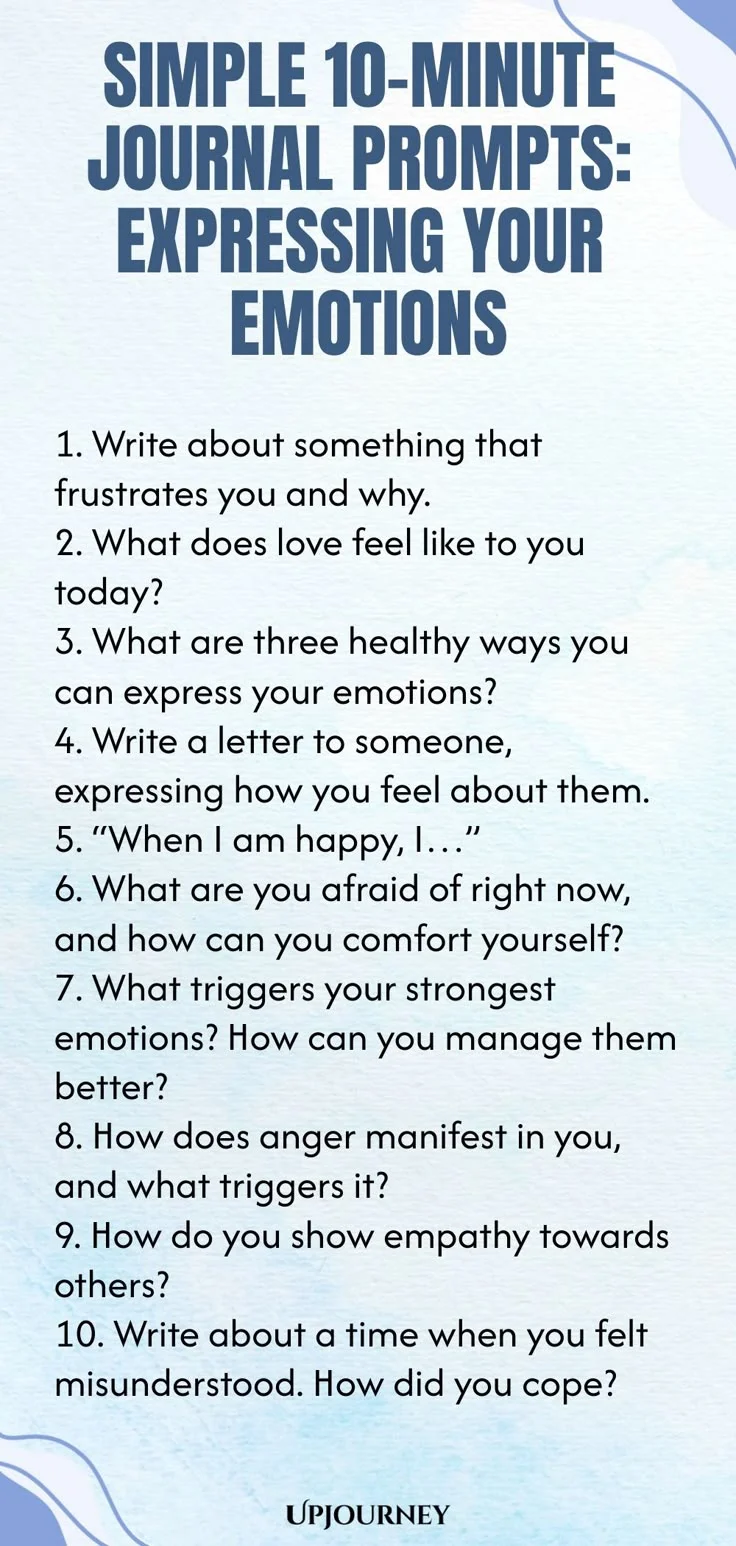
10 Practical Journaling Prompts to Enhance Emotional Health
Self-Awareness Prompts
Self-awareness is the cornerstone of emotional well-being. Journaling prompts like “What emotion am I feeling right now and why?” or “What triggered my mood today?” give you a snapshot of your internal world. For example, after a tense meeting, jotting down feelings can reveal patterns of anxiety or frustration, helping you address them proactively.
Gratitude and Positivity Prompts
Shifting focus to positive experiences can uplift spirits even on tough days. Prompts such as “What are three things I’m grateful for today?” or “What made me smile recently?” encourage appreciation and foster optimism. Sarah, a teacher, finds that starting her journaling session with gratitude rewires her mindset, making stressful classroom moments easier to navigate.
Stress and Anxiety Relief Prompts
When anxiety mounts, writing it out can be calming. Prompts like “What are my current worries, and which can I control?” or “Describe a peaceful place I can visualize now” help externalize fears and build coping strategies. Jason, an engineer, uses this approach during high-pressure projects to ground himself and regain focus.
Reflection and Personal Growth Prompts
Journaling for growth means looking back and forward simultaneously. Questions like “What lesson did I learn from a recent challenge?” or “What qualities do I want to develop?” encourage introspection and goal setting. This habit transforms journaling into a tool for ongoing self-improvement, guiding you through the emotional ebbs and flows of life.
Tips for Maximizing Your 10-Minute Journaling Practice
Setting the Right Environment
The impact of journaling increases when the environment supports calm and concentration. Find a quiet spot that feels inviting—a cozy nook or a sunny corner. Light a candle or enjoy your favorite cup of tea to create a ritual that signals to your brain it’s time to slow down. This intentional setting helps you dive deeper during those brief minutes and makes journaling something to look forward to, rather than a chore.
Incorporating Journaling Into Daily Life
Fitting journaling into a busy schedule can be challenging, but small adjustments make a big difference. Pair journaling with an existing habit like your morning coffee or your evening wind-down. Use a pocket-sized notebook or a journaling app for convenience on the go. It’s about making the practice flexible and accessible so that you don’t miss out on its benefits when life gets hectic.
Conclusion: Embracing Journaling as a Tool for Emotional Resilience
Journaling in just 10 minutes a day offers more than a moment of peace—it builds emotional resilience for life’s ups and downs. Whether you are managing daily stress, seeking clarity, or fostering gratitude, those few minutes can transform your mental landscape. By embracing practical journaling prompts and cultivating a consistent routine, you empower yourself to navigate emotions with grace and strength. Like any muscle, emotional well-being grows stronger with intentional practice, and journaling is a simple, effective way to start. Take the first step today, and watch how those 10 minutes shape a healthier, more balanced you.